
Iconic Guitar Solos: Greatest Guitar Solos in History
What makes a guitar solo truly iconic?
It isn’t speed. It isn’t complexity. It isn’t even volume.
An iconic solo is the moment when a guitar stops being an instrument and becomes a voice. A voice you recognize instantly. A voice that defines not only a song, but sometimes an entire era.
Here are ten guitarists whose solos did exactly that.
Jimi Hendrix
“All Along the Watchtower”

Before Hendrix, electric guitar had power. After Hendrix, it had possibility.
His solo on “All Along the Watchtower” doesn’t simply decorate the song — it transforms it. The notes seem to bend beyond structure, stretching toward something unpredictable yet intentional. There is tension in his phrasing, but never chaos. Every surge feels earned.
Hendrix made the guitar feel alive — volatile, expressive, and deeply human.
That sense of freedom changed rock music forever.
Eric Clapton
“Layla”
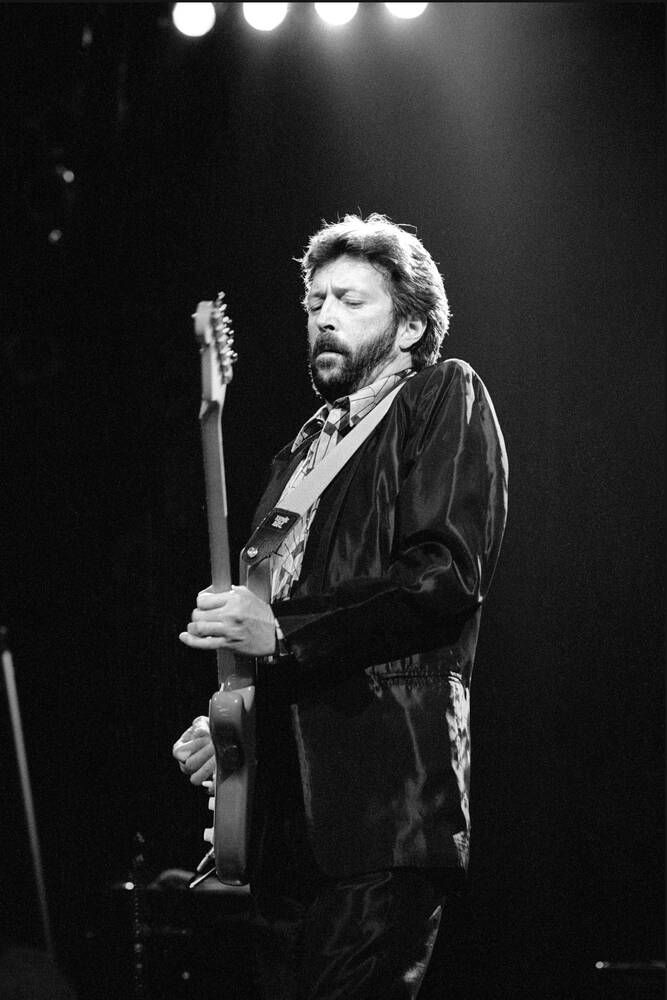
The solo in “Layla” feels urgent, almost restless. There’s longing in it — not theatrical, but personal.
Clapton’s playing has always carried the emotional gravity of the blues, and here it feels exposed. The phrasing doesn’t rush to impress; it unfolds like someone trying to say something difficult out loud.
What makes it iconic is not flamboyance, but vulnerability. You remember it because you feel it.
Jimmy Page
“Stairway to Heaven”

Few solos build anticipation the way this one does.
By the time the solo arrives in “Stairway to Heaven,” the song has already traveled far — from quiet introspection to gathering intensity. Page doesn’t interrupt that journey; he completes it.
The solo rises with purpose. It grows, expands, then releases. It feels inevitable, as if the entire song was moving toward that very moment.
That sense of narrative completion is what makes it timeless.
David Gilmour
“Comfortably Numb”

Some solos overwhelm you. Others stay with you quietly.
Gilmour’s solo in “Comfortably Numb” is often cited among the greatest of all time — not because it is flashy, but because it breathes. Each note lingers just long enough to matter. There is space between phrases, and in that space, emotion grows.
He understands restraint. And restraint, in music, can be more powerful than speed.
The solo feels less like a performance and more like a confession.
Eddie Van Halen
“Eruption”

When “Eruption” appeared, it sounded like the future arriving early.
It wasn’t simply a solo — it was a statement. Van Halen expanded what rock guitar could do, introducing a new vocabulary that countless players would later explore.
But beyond innovation, what made it unforgettable was confidence. It felt fearless. Bold. Playful, even.
It redefined the boundaries of technical possibility in mainstream rock.
Slash
“Sweet Child o' Mine”

Some solos are instantly recognizable within seconds.
Slash’s lead work in “Sweet Child o’ Mine” carries a melodic clarity that cuts through everything. It balances aggression with lyricism — raw but controlled.
There’s something undeniably human about his phrasing. It doesn’t feel calculated. It feels instinctive.
That authenticity is what made it one of the defining sounds of late-1980s rock.
Carlos Santana
“Europa”

Santana doesn’t rush. He lets the guitar sing.
In “Europa,” the melody unfolds patiently, almost like a conversation. The phrasing carries warmth and spiritual depth, blending blues expression with Latin influence in a way that feels unmistakably his own.
His tone is smooth, sustained, and vocal-like — not aggressive, but deeply emotional.
It’s not about how many notes he plays. It’s about how much meaning each one carries.
Brian May
“Bohemian Rhapsody”

Brian May approaches guitar like a composer.
The solo in “Bohemian Rhapsody” is not long, but it is perfectly placed. It bridges sections of the song with theatrical precision. It feels deliberate, structured, almost orchestral in character.
May’s playing always served the song first. That discipline — the refusal to overplay — made his contributions enduring.
The solo doesn’t dominate the track. It completes it.
Richie Sambora
“Wanted Dead or Alive”

Sambora brought blues phrasing into arena rock without losing intimacy.
In “Wanted Dead or Alive,” the guitar lines feel reflective — almost solitary — even though the song became a stadium anthem. That contrast is powerful. The solo doesn’t try to overpower; it reinforces the narrative of a traveling musician on the road.
His sense of melody helped define the emotional core of Bon Jovi during their peak years.
John Mayer
“Slow Dancing in a Burning Room”

Mayer represents a more modern expression of guitar heroism — subtle, controlled, emotionally precise.
The solo in “Slow Dancing in a Burning Room” never feels rushed. It unfolds carefully, almost reluctantly. There’s tension, but it’s internal rather than explosive.
It reminds listeners that virtuosity is not always about spectacle. Sometimes it’s about knowing exactly when to stop.
When Tone Becomes Identity

What makes a guitar solo unforgettable?
Across generations — from Jimi Hendrix to John Mayer — the answer has rarely been speed or complexity. It has been identity.
An iconic guitar solo is not merely played. It is voiced. And voice, in music, is inseparable from character — the character of the player, and the character of the instrument in their hands.
When we revisit legendary moments like “Stairway to Heaven” by Jimmy Page or “Comfortably Numb” by David Gilmour, what stays with us is not just the notes. It is the tone. And tone is never accidental.
The Signature Behind the Sound
Listen to the opening phrases of “Sweet Child o' Mine” and you immediately recognize Slash. Hear the sustain in “Europa” and it is unmistakably Carlos Santana. The emotional arc of “Wanted Dead or Alive” carries the melodic fingerprint of Richie Sambora within Bon Jovi.
What connects these players is not genre.
It is individuality.
Each of them developed a voice that could not be mistaken for someone else. Their phrasing, their dynamics, their restraint — these are artistic decisions. But beneath those decisions lies something physical: the way their instrument responds.
The way it resonates. The way it sustains. The way it reacts to touch.
The Instrument as a Partner, Not a Tool
Great guitarists often speak about their instrument as if it were alive. Not because of mythology — but because responsiveness matters.
A guitar that breathes with the player changes everything.
When Eric Clapton recorded “Layla,” the emotional intensity came not only from his hands, but from how the instrument translated subtle variations in pressure and attack.
When Eddie Van Halen unleashed “Eruption,” innovation was possible because the instrument responded without hesitation.
The guitar was not resisting. It was cooperating.
That relationship — between builder, player, and instrument — is often overlooked when discussing iconic solos. Yet it is fundamental.
Craftsmanship and the Birth of Voice
An iconic solo is rarely created on an anonymous instrument.
There is always a story behind the sound:
A guitar built to respond faster.
A neck carved for comfort over long sessions.
A body that resonates in a specific frequency range.
A setup dialed in for nuance, not just power.
These elements do not create greatness on their own.
But they remove limitations.
And when limitations disappear, expression becomes clearer.
The reason certain legendary guitarists sound so distinct is not because they chased perfection. It is because they found instruments that reflected who they already were.
Boutique Philosophy: Building for Expression
In the modern era, where production instruments are widely available, something interesting has happened.
Players who care deeply about identity are returning to intentional craftsmanship.
Not for status. Not for branding. But for responsiveness.
Boutique guitar philosophy is not about ornamentation. It is about dialogue — between wood, hardware, electronics, and the musician’s hands.
The goal is simple: When you bend a note, it should bend with you. When you hold a sustain, it should hold without strain. When you dig in, the instrument should answer — not compress your personality.
That is the difference between playing a guitar and collaborating with one.
Why Iconic Solos Still Matter Today
The solos of Brian May in “Bohemian Rhapsody” or Jimi Hendrix in “All Along the Watchtower” endure not because they were complex. They endure because they were personal. And personal expression requires trust in your instrument.
Today’s players are no different. Whether performing in arenas or recording in a home studio, the pursuit remains the same: To sound like no one else.
That pursuit is where craftsmanship becomes relevant — not as luxury, but as clarity.
Final Reflection: The Future of Iconic Tone
Every generation produces extraordinary guitarists.
But the ones remembered are those who develop a voice strong enough to stand alone.
An iconic guitar solo is the moment when: Technique disappears. Gear becomes invisible. And identity becomes audible.
The question is no longer, “How fast can you play?”
It becomes: Does your instrument allow you to be unmistakably yourself?
Because in the end, tone is not found. It is revealed.
Comments