
Signature Guitars and Custom Guitars Explained: Choosing Between Identity and Individuality
- Dec 27, 2025
- 9 min read
Updated: Feb 10
A builder-centric perspective
From a builder’s standpoint, the difference between a signature guitar and a custom guitar is not primarily about price, prestige, or exclusivity. It is about intent.
Every instrument begins with a question. A signature guitar asks, “How do we translate an artist’s identity into a repeatable design? ”A custom guitar asks, “How do we solve a specific player’s needs through an instrument?”
Understanding this distinction is essential—not only for players, but for anyone involved in designing, building, or commissioning guitars.
What Is a Signature Guitar?
A signature guitar is a production instrument developed in collaboration with a specific artist. Its specifications—neck shape, pickups, hardware, electronics, or finish—are based on the preferences of that artist, refined and finalized by the manufacturer for public release.
Although often marketed as “personal,” a signature guitar is not built for the buyer. It is built to reflect the playing style, tonal preferences, and visual identity of someone else—usually a well-known musician with a recognizable sound or image.
Signature models typically:
Are based on existing production platforms
Are produced in limited or semi-limited quantities
Carry brand and artist association as a core value
For many players, the appeal lies in accessibility: owning an instrument inspired by a respected musician without entering the complexity of a custom build.
What Is a Custom Guitar?
A custom guitar, by contrast, is built for one specific individual. Rather than adapting to an artist’s established identity, the instrument is shaped around the player’s own needs—physical, tonal, and musical.
Custom guitars range from custom shop variations (where options are selected within an existing framework) to fully bespoke builds, where nearly every detail is defined through direct communication between player and builder.
A true custom guitar emphasizes:
Ergonomics tailored to the player
Tonal goals defined by use, not image
Functional decisions over cosmetic trends
Long-term playability and comfort
In this context, the guitar becomes less of a product and more of a tool—designed to disappear in the player’s hands rather than make a statement on its own.
Advantages and Limitations of Signature Guitars vs Custom Guitars
Signature Guitars
Advantages | Limitations |
Artist-tested specifications with a clear tonal and ergonomic reference | Limited personalization beyond predefined specs |
Cohesive and refined design due to controlled options | Designed around an artist’s needs, not the individual buyer |
Consistent build quality and repeatability | May not suit all playing styles or physical preferences |
Strong brand and identity association | Changes are sometimes cosmetic rather than functional |
Easier resale value and market recognition | Less flexibility for long-term ergonomic adaptation |
Shorter waiting time compared to full custom builds | Encourages adaptation by the player rather than adaptation of the instrument |
Custom Guitars
Advantages | Limitations |
Built entirely around the player’s physical, tonal, and musical needs | Higher cost compared to production or signature models |
Maximum control over specifications and materials | Longer build time and planning phase |
Optimized ergonomics and long-term playing comfort | Requires clear communication and self-awareness from the player |
Function-driven design without market or image constraints | Design mistakes fall entirely on the custom brief |
Deeper personal connection to the instrument | Lower resale liquidity and narrower secondary market |
Freedom to explore unconventional or experimental solutions | Over-specification can lead to unfocused results if not guided |
"While signature guitars prioritize clarity, consistency, and identity, custom guitars prioritize intention, adaptation, and individuality—each with its own set of trade-offs."
Why Signature Guitars Are Not “Custom Lite”
A common misconception is that signature guitars are simply diluted custom instruments. From a builder’s view, this is inaccurate.
Signature guitars are optimized designs, not incomplete ones. The challenge lies in deciding what not to include. Every removed option increases clarity, consistency, and reliability across builds.
This is why well-designed signature guitars often feel more cohesive than poorly defined custom orders.
Why Custom Guitars Demand More From the Player
Custom guitars require more than budget—they require self-awareness.
From a luthier’s perspective, the most successful custom builds come from players who:
Understand their physical interaction with the instrument
Can articulate functional priorities
Separate tonal goals from visual trends
Without this clarity, a custom guitar risks becoming over-specified but under-focused.
Choosing Between Identity and Individuality
From the bench, the choice is simple:
Signature guitars are ideal when the goal is to embody a known musical identity through a refined, stable design.
Custom guitars are ideal when the goal is to remove barriers between the player and the instrument itself.
Neither is a shortcut. Neither is superior. They are different expressions of intentional design.
Top Signature Guitars — A Builder’s Perspective
Selected by Markland Guitarworks
This is not a popularity list. These instruments are chosen because they represent clear, intentional design decisions—guitars that advanced how signature models function, feel, and communicate identity at a structural level.
1. Ibanez JEM and Ibanez PIA
Why It Matters
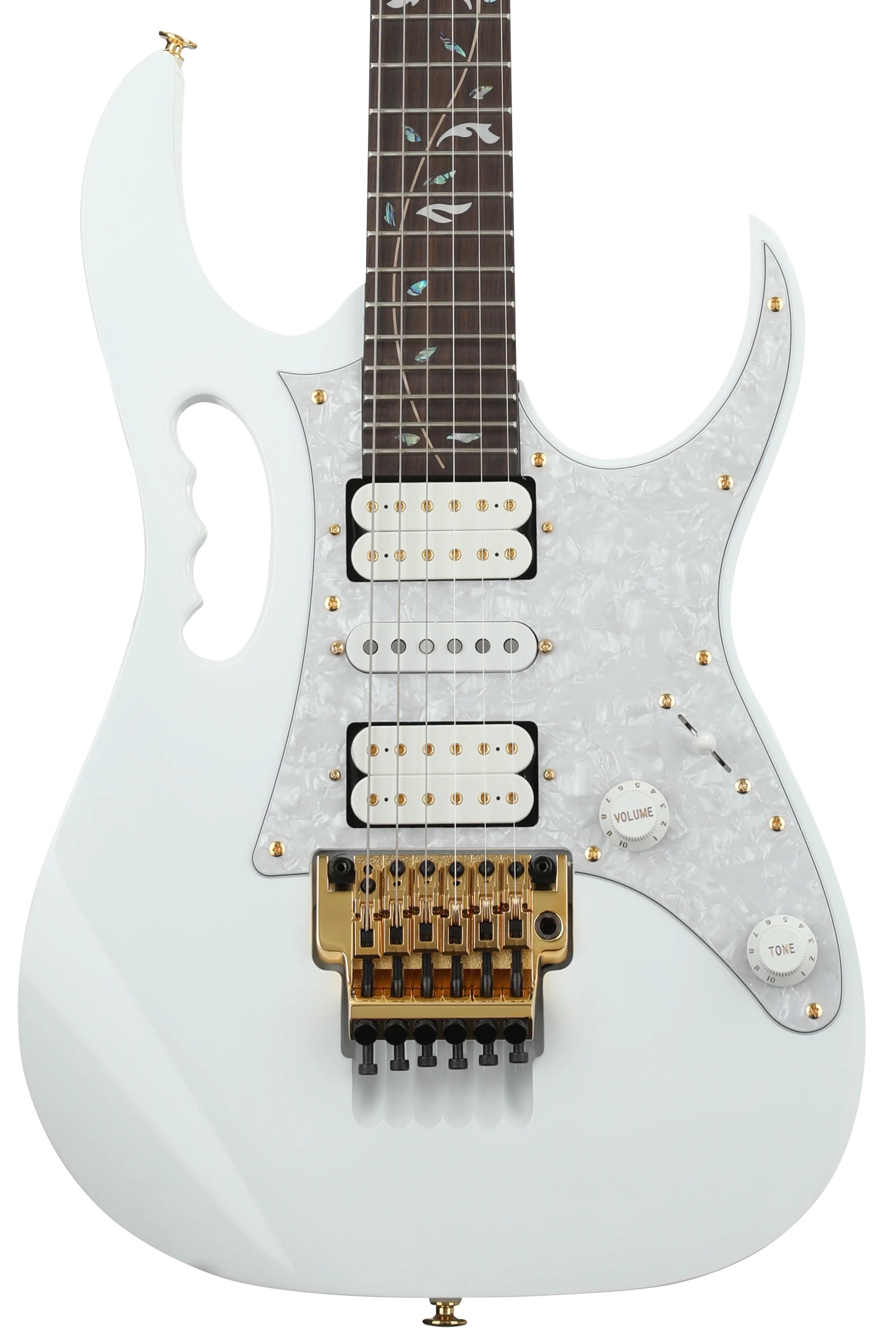
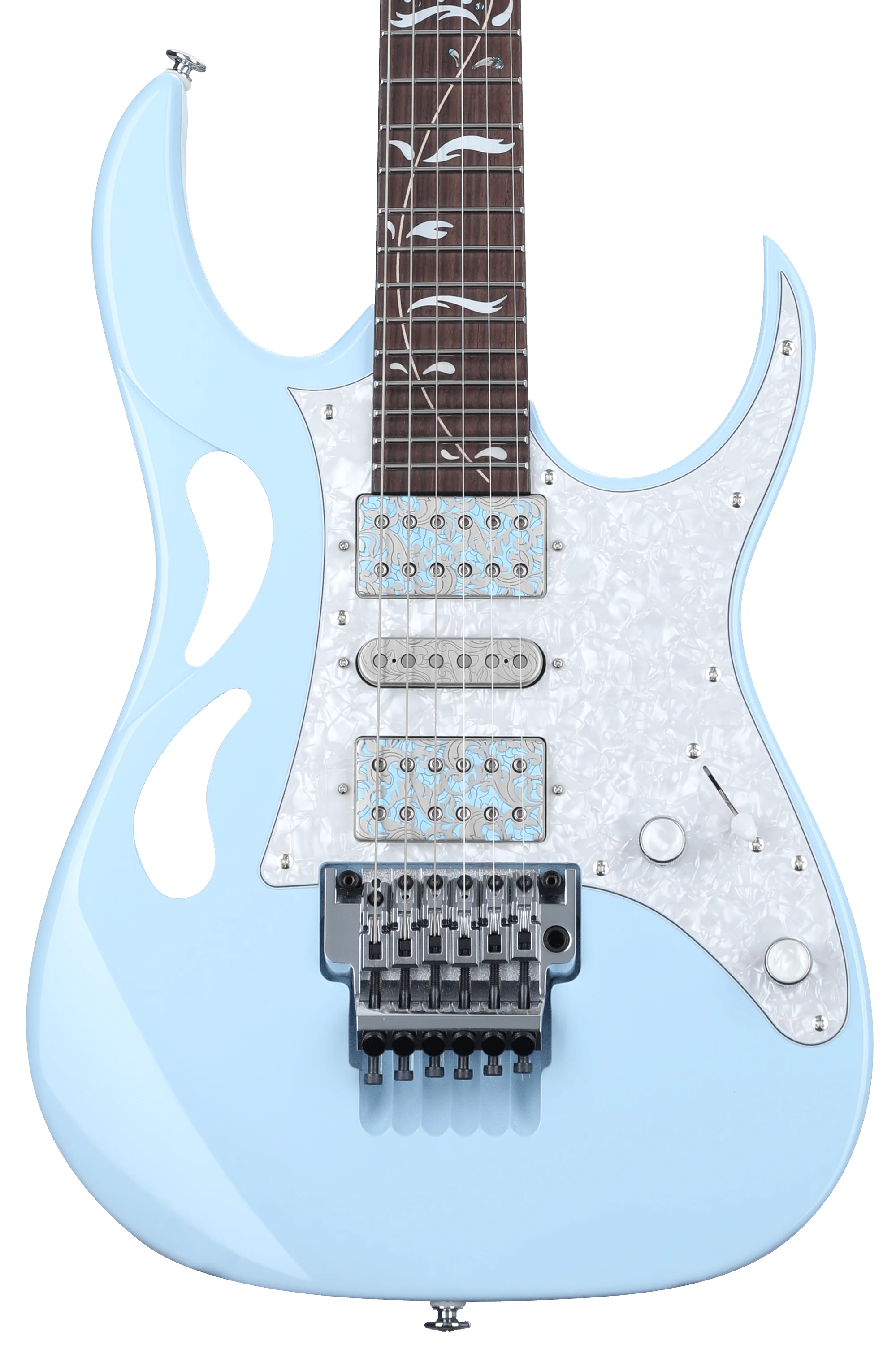
Introduced in 1987, the Ibanez JEM marked a structural departure from existing superstrat designs of its time. Rather than modifying an established platform, Steve Vai and Ibanez defined a new design brief centered on extended range articulation, physical accessibility, and expressive control at extreme gain levels.
Key technical characteristics of the original JEM included:
A thin, flat-radius neck optimized for legato and wide interval playing
A locking tremolo system integrated into the body geometry rather than treated as an add-on
Deep body contouring that prioritized upper-fret access and player movement
Early adoption of high-output, articulate pickups voiced for note separation rather than compression
The now-iconic monkey grip was not merely visual branding—it addressed balance and handling for a player who physically interacts with the instrument on stage, highlighting an early example of ergonomics influencing form in a signature model.
The transition to the Ibanez PIA (Paradise in Art), introduced in 2020, represents a mature phase of the same design philosophy. Rather than reinventing the platform, Ibanez revisited structural decisions with three decades of accumulated performance data.
Notable technical refinements include:
The replacement of the monkey grip with the Petal Grip, redistributing mass and improving body stiffness while retaining handling ergonomics
A revised neck carve and fret treatment focused on long-session comfort and reduced fatigue
Pickup re-voicing to accommodate modern gain staging, digital rigs, and extended dynamic range
Subtle adjustments in body contour depth and balance to improve seated and standing stability
From a builder’s perspective, the JEM → PIA evolution is significant because it demonstrates long-term design continuity. Each iteration removes or reshapes elements that no longer serve the player, without abandoning the instrument’s structural identity.
This is not cosmetic evolution. It is functional refinement informed by decades of real-world use, making it one of the clearest examples of how a signature guitar can evolve historically while maintaining design integrity.
2. PRS John Mayer Silver Sky
Why It Matters
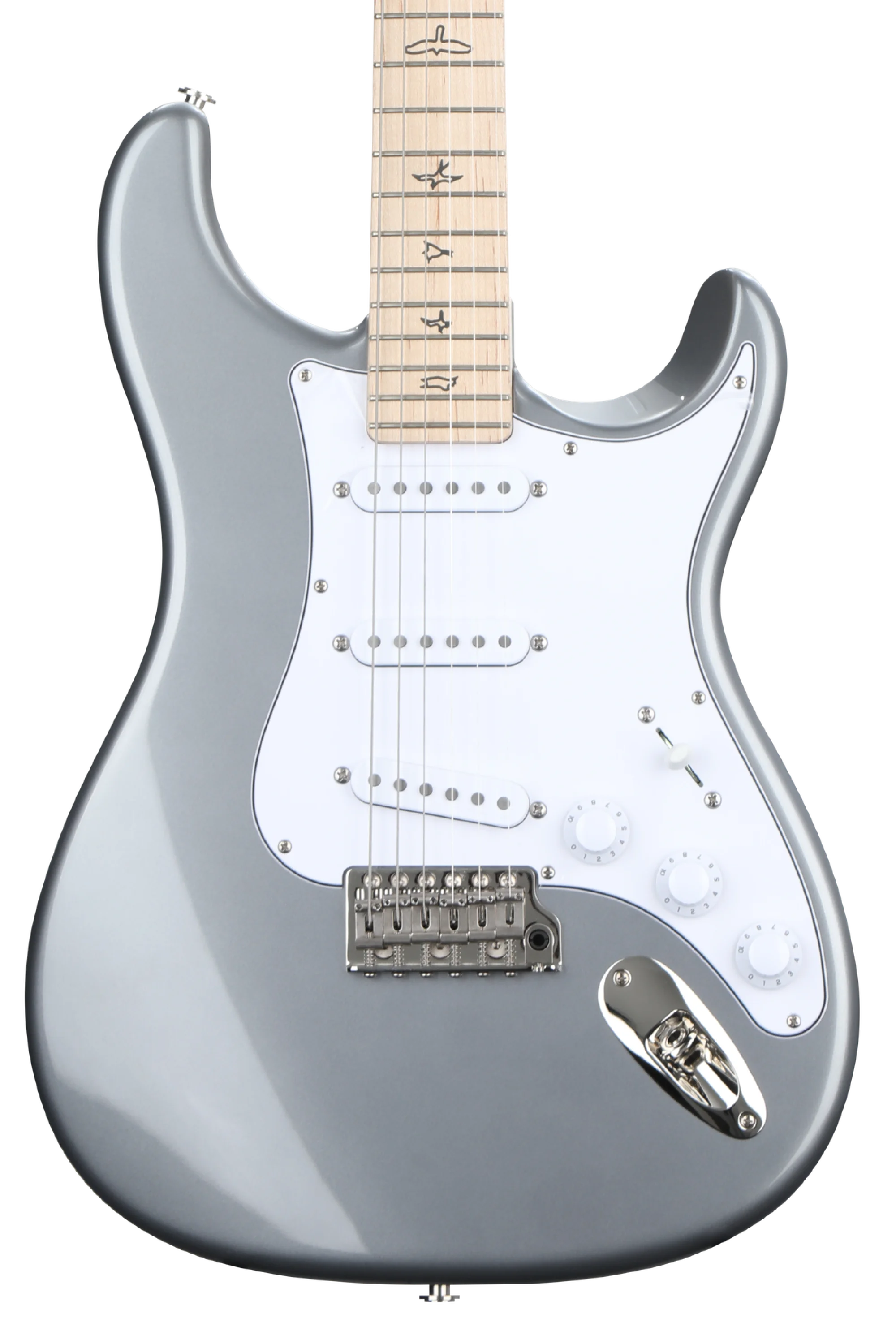
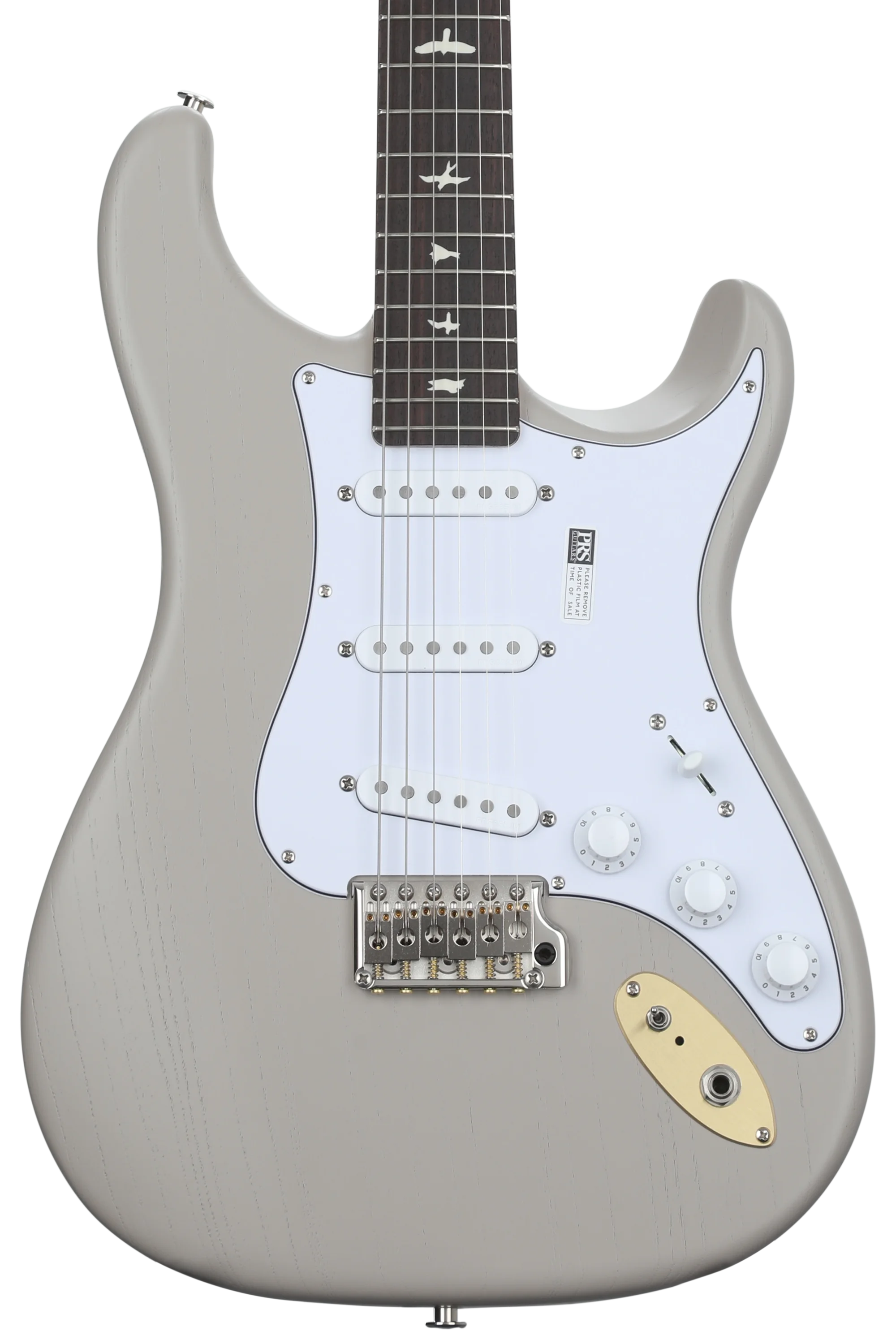
Released in 2018, the Silver Sky arrived amid skepticism—largely because it positioned itself within one of the most saturated and historically rigid guitar archetypes: the Strat-style platform.
Rather than pursuing radical innovation, the Silver Sky’s significance lies in its system-level recalibration.
Technical considerations included:
A deliberately chosen 7.25” fretboard radius, shaping chord feel, vibrato resistance, and string excursion
Narrow/tall frets influencing attack definition and left-hand feedback
Pickup voicing focused on string-to-string balance and controlled midrange coherence, rather than sheer output
Historically, most Strat-style signature models altered isolated components—pickups, neck profiles, or hardware—often without recalibrating the system as a whole. The Silver Sky instead adjusted multiple interdependent variables simultaneously, ensuring that no single change destabilized the instrument’s overall response.
The Emergence of “Dead Spec”
From a builder’s perspective, the Silver Sky is historically important because it represents the deliberate acceptance of what can be described as dead spec.
Dead spec refers to specifications that, on paper, appear outdated, limiting, or even counterproductive—yet are intentionally retained because they define behavioral boundaries of the instrument.
Examples include:
A tight fretboard radius that limits extreme bending but reinforces chordal stability
Lower-output pickups that restrict compression but preserve transient clarity
Traditional geometry that resists modernization in favor of predictable response
Rather than “fixing” these characteristics, the Silver Sky embraces them and optimizes everything around them through tighter tolerances, refined setup parameters, and controlled interactions between components.
This marks a shift in signature guitar philosophy:
From feature accumulation → behavior preservation
From innovation-driven specs → intention-driven constraints
From a builder’s viewpoint, the Silver Sky demonstrates that:
Dead specs are not flaws, but design anchors
Constraint can be used as a stabilizing force in system design
Signature identity can be expressed through what is deliberately not changed
The Silver Sky is historically significant because it legitimizes dead spec as a conscious design choice, proving that modern signature guitars do not require novelty—they require alignment between intent, limitation, and execution.
3. Music Man John Petrucci (JP / Majesty)
Why It Matters
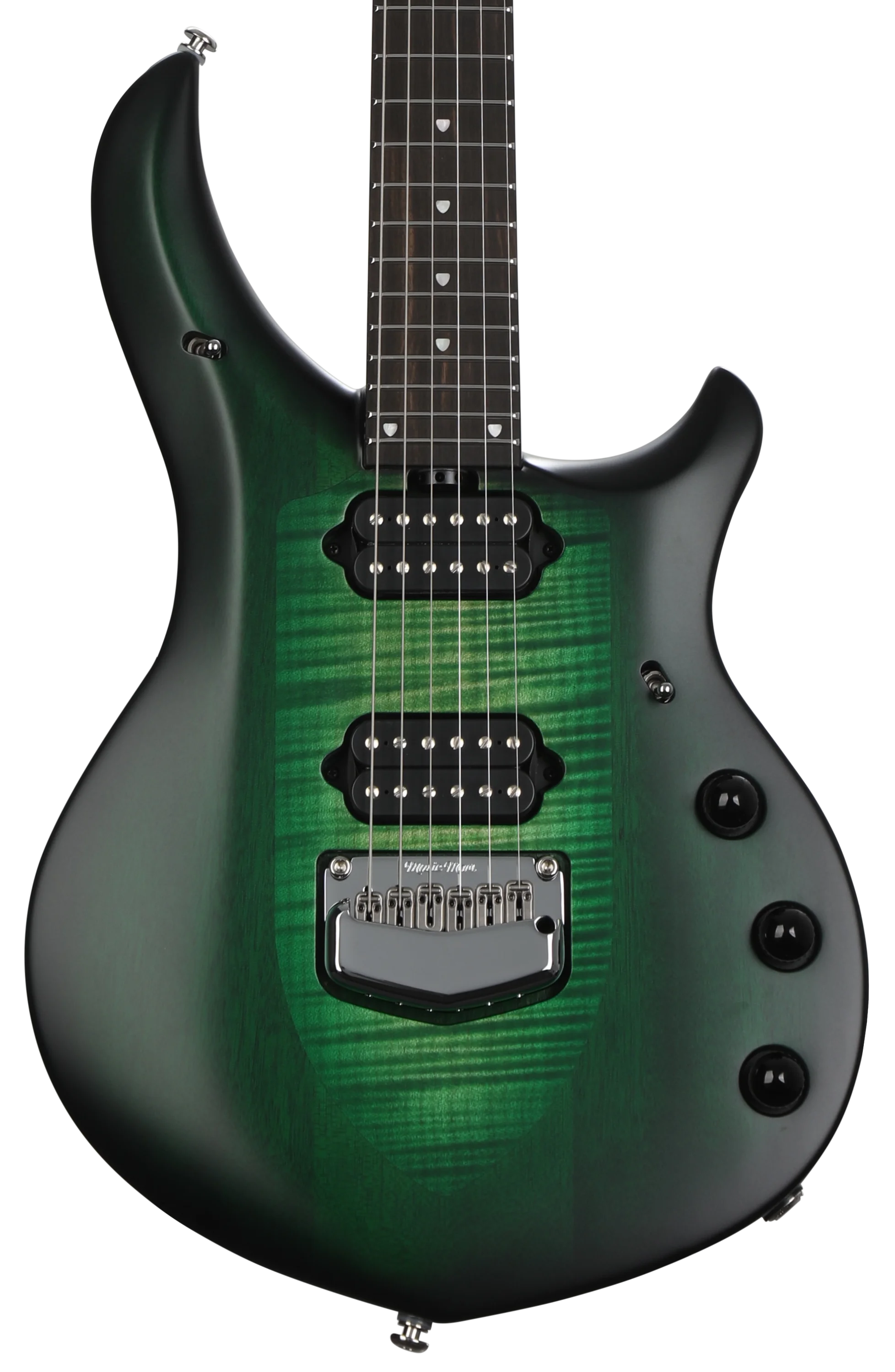
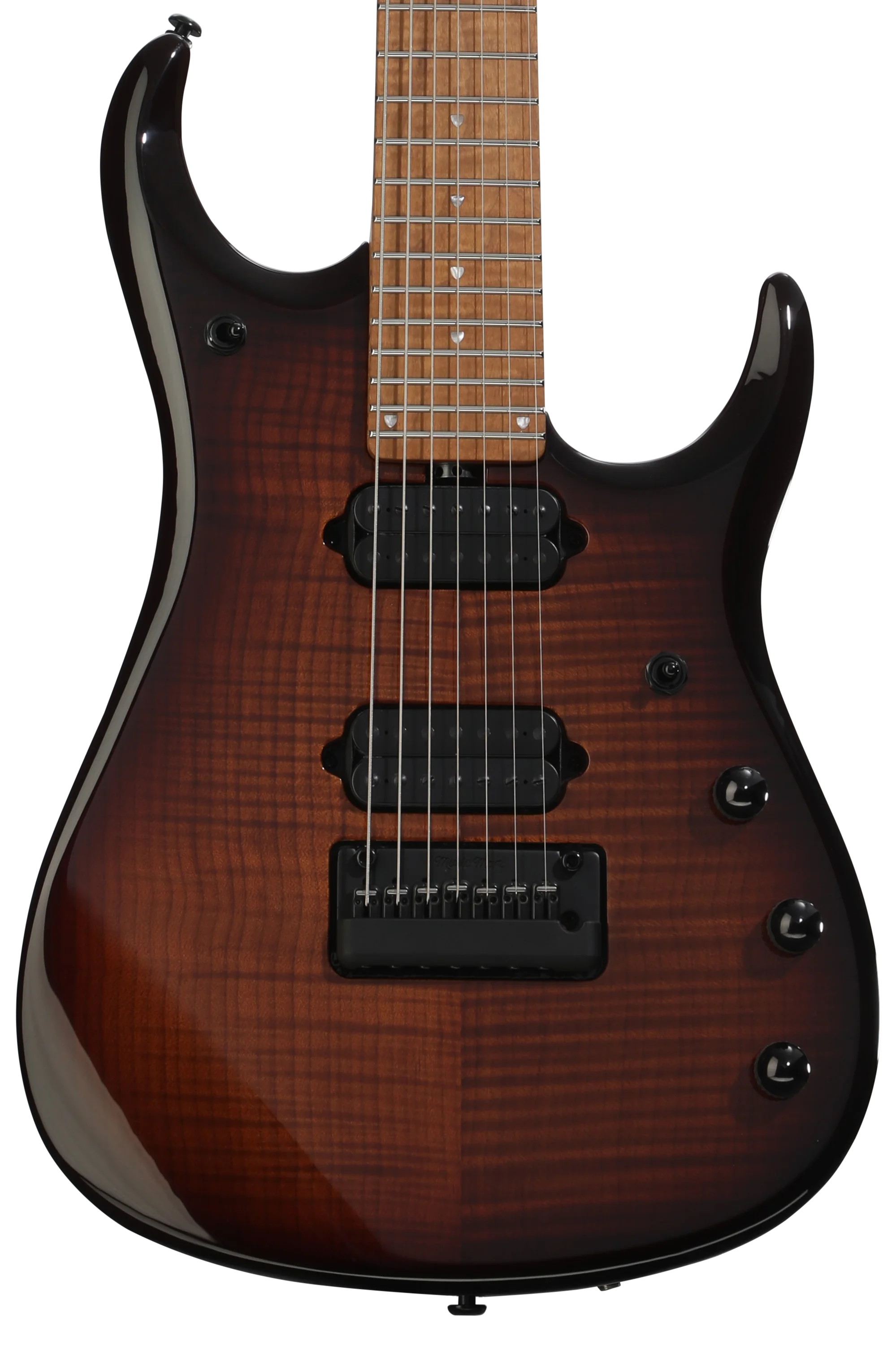
The collaboration between John Petrucci and Ernie Ball Music Man began in the early 1990s, at a time when most signature guitars were still cosmetic derivatives of existing platforms. The original JP model (1999) introduced a design philosophy that treated ergonomics, electronics, and manufacturing tolerances as a single system.
Early technical contributions included:
A deeply contoured body carved for torso fit and right-arm comfort
A slim but stable neck profile, optimized for accuracy under high-speed, high-gain playing
Tight CNC tolerances that allowed consistency across production—critical for touring musicians
What distinguishes the JP line historically is its incremental evolution rather than reinvention. Over successive revisions, Petrucci and Music Man refined:
Neck thickness and shoulder shape based on fatigue data
Tremolo geometry for tuning stability under aggressive use
Pickup voicing aligned with increasingly complex gain structures
The introduction of the Majesty (2014) marked a structural leap. Unlike earlier JP models, the Majesty adopted a neck-through construction, reducing mechanical energy loss at the neck joint and improving sustain consistency across registers.
Additional engineering decisions included:
Extensive chambering and body thinning to reduce mass without sacrificing stiffness
Fully integrated piezo and active electronics, designed into the body rather than retrofitted
Revised scale interaction and balance for seated and standing performance
From a builder’s perspective, the JP → Majesty transition represents a rare case where a signature guitar moves decisively toward instrument engineering, not just refinement. It stands as one of the most complete examples of a modern, performance-driven signature platform.
4. Fender Eric Clapton Stratocaster
Why It Matters
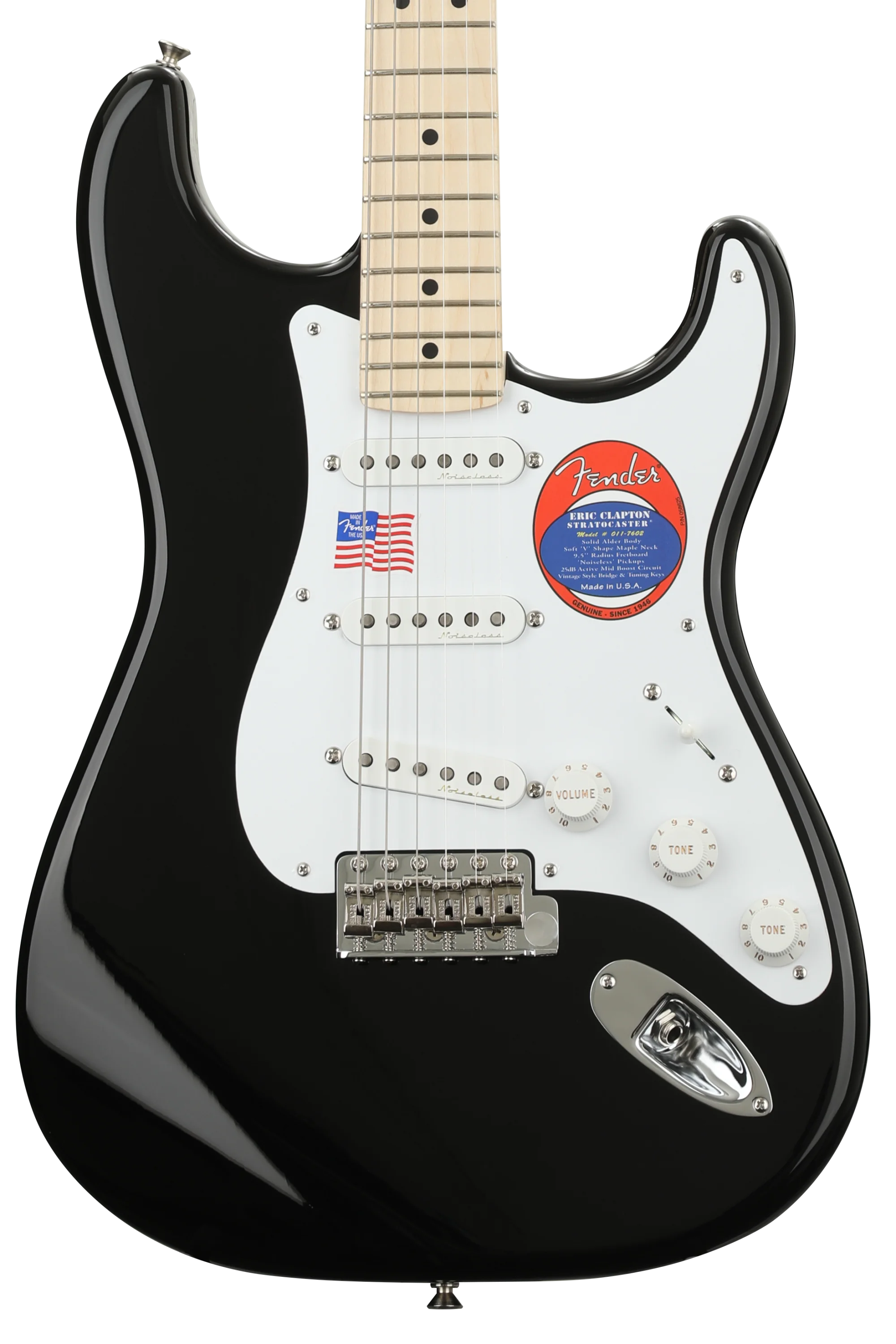
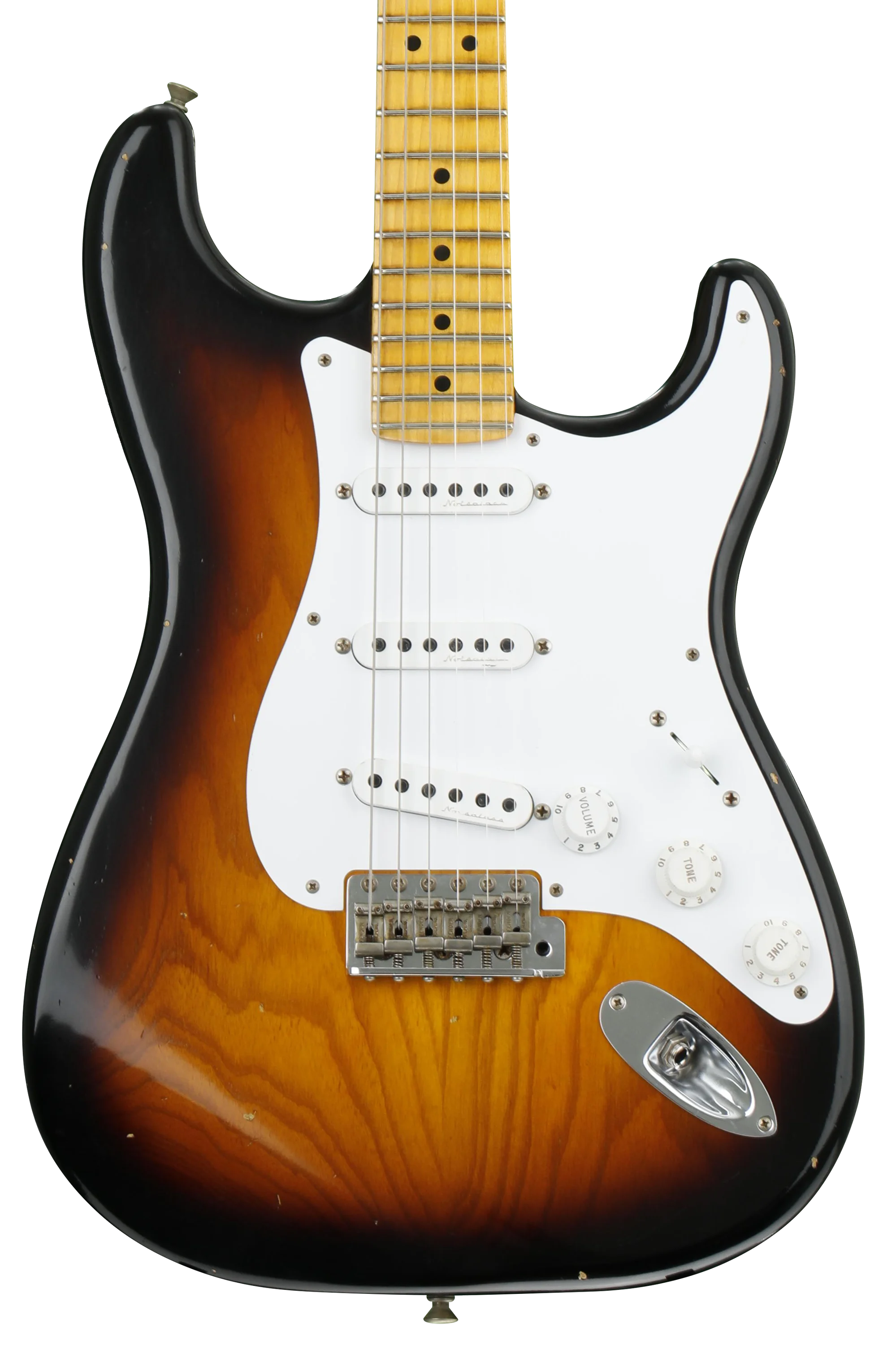
Introduced in the late 1980s, the Eric Clapton Stratocaster stands as one of the earliest examples of a signature guitar redefining an instrument through electronic architecture rather than mechanical redesign.
At its core, the model retained a conservative Strat foundation. However, two engineering decisions fundamentally altered its behavior:
The inclusion of an active mid-boost circuit, reshaping the Strat’s frequency profile
A noiseless pickup configuration, prioritizing signal integrity under gain
Historically, this approach was unconventional. Most signature models of the era focused on visible changes—hardware, finishes, or body shapes. Clapton’s model instead addressed the Strat’s inherent limitations in midrange density and noise performance.
From a builder’s standpoint, this guitar is significant because it illustrates:
How electronic gain staging can compensate for mechanical constraints
How tonal identity can be redefined without altering ergonomics
Early integration of active systems into mainstream signature instruments
The Clapton Strat remains a key reference point for builders considering electronics as a structural design tool, not a secondary feature.
5. Gibson Les Paul Slash Signature
Why It Matters
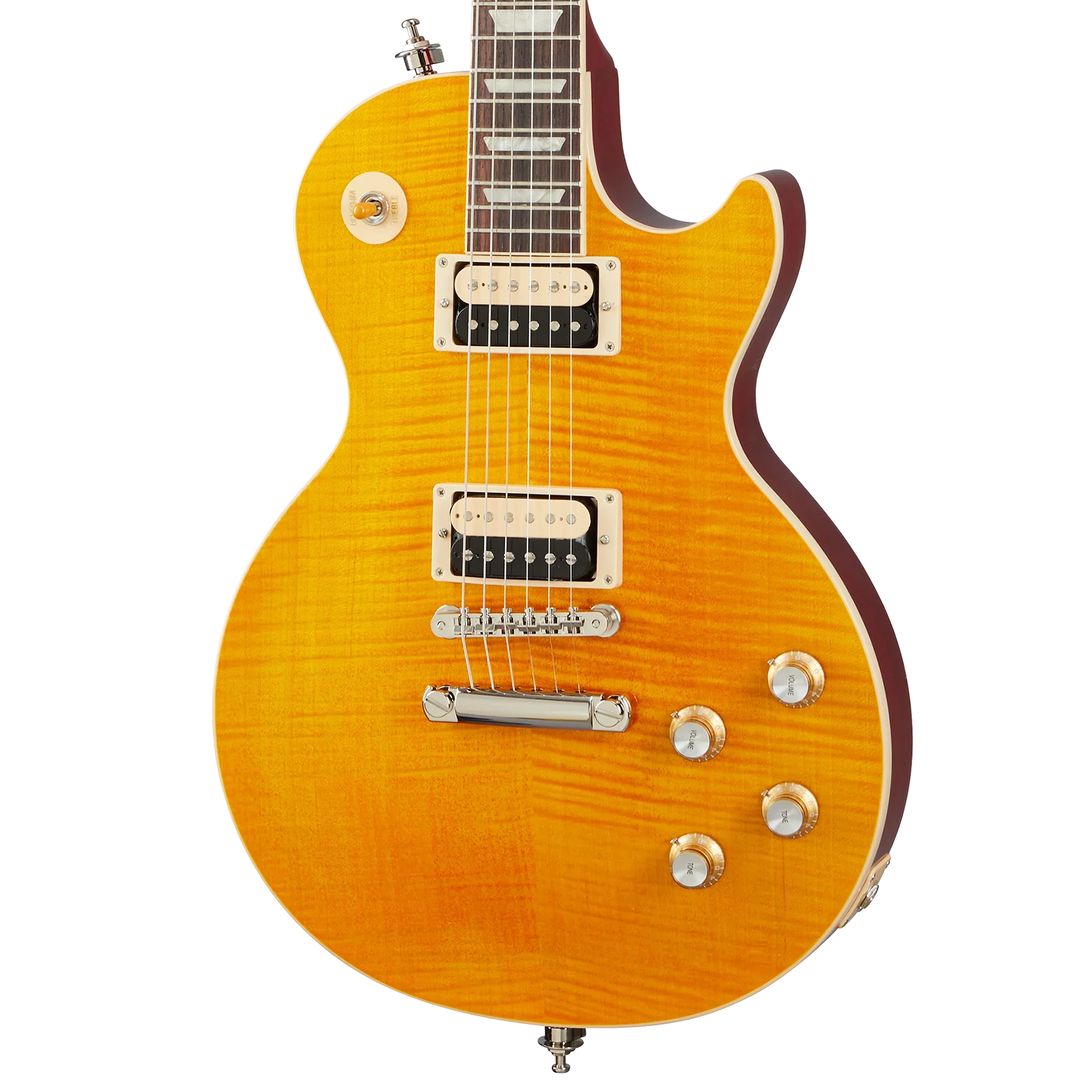
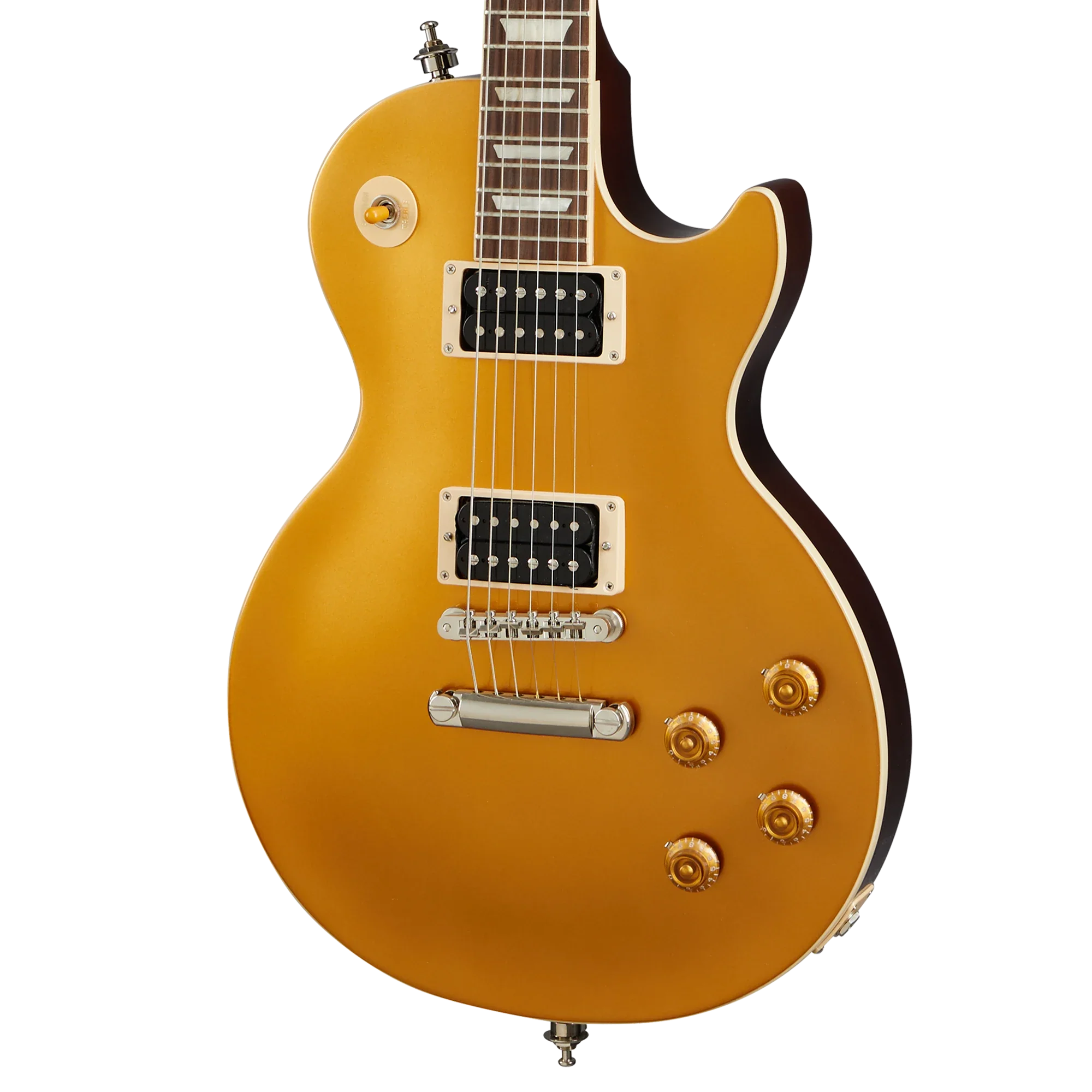
The Slash Les Paul occupies a unique position in signature guitar history: it operates within one of the least flexible production platforms in electric guitar design.
The Les Paul’s construction—short scale, set neck, dense body—leaves little room for structural modification without destabilizing the instrument’s character. As a result, Slash’s signature models focus on component-level precision rather than architectural change.
Key technical emphases include:
Pickup voicing calibrated for dynamic response and upper-mid articulation
Neck profile choices that balance grip stability with expressive bending
Nut material and setup tolerances affecting attack consistency
From a historical perspective, this model demonstrates that:
Signature identity can be expressed through tight control of tolerances
Refinement can be more impactful than innovation
Familiar platforms still offer room for meaningful differentiation
For builders, the Slash Les Paul serves as a lesson in discipline—how to work effectively within hard constraints while still delivering a distinct playing experience.
Closing Thought: The Builder’s Responsibility
Throughout this discussion, one distinction has remained consistent: guitars do not become meaningful through labels, but through intentional design.
Signature guitars and custom guitars occupy different positions in the design spectrum, yet both demand the same level of discipline from the builder. One operates within defined constraints—identity, repeatability, historical continuity. The other operates within freedom—individual ergonomics, tonal specificity, and personal expression. Neither approach excuses arbitrary decisions.
The historical examples discussed—whether the long-term refinement of the JEM into the PIA, the engineering integration of the JP and Majesty, the acceptance of dead spec in the Silver Sky, or the component-level discipline of classic platforms—demonstrate a shared principle: every specification carries consequences. What is added, what is removed, and what is deliberately left unchanged all shape how an instrument behaves over time.
From a luthier’s perspective, responsibility lies not in maximizing features, nor in preserving tradition for its own sake, but in maintaining coherence. A signature guitar succeeds when identity is preserved without collapsing into imitation or nostalgia. A custom guitar succeeds when individuality is articulated without excess, over-specification, or distraction.
In both cases, the builder’s task is the same: to translate intent into structure, constraint into clarity, and limitation into purpose.
Ultimately, what defines a great instrument is not whether it is labeled signature or custom, but whether its design choices remain honest, functional, and meaningful long after the novelty has faded.
That balance—not the name on the headstock—is the true measure of craftsmanship.


Comments